
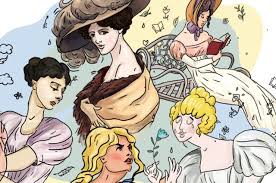
The female image in literature has always reflected the condition of society, its understanding of women’s roles, and the boundaries of what was considered possible or acceptable. Tracing the evolution of female characters allows us to see how social norms, economic structures, and cultural expectations have changed over time. This topic is important not only for literary analysis but also for understanding the broader historical path of women’s independence and self-realization.
Historical Framework: From Function to Subjectivity
For centuries, women in literature were often portrayed either as idealized embodiments of virtue or as objects of desire and moral testing for male protagonists. Their individuality was limited by family roles, social expectations, and narrative function. They existed within the story, but rarely as fully autonomous subjects.
The situation began to shift in the eighteenth and nineteenth centuries, particularly in European and English-language fiction. The rise of realism and the psychological novel created space for deeper exploration of inner life. Women gradually ceased to be merely symbolic figures and became complex individuals with agency, motivation, and perspective.
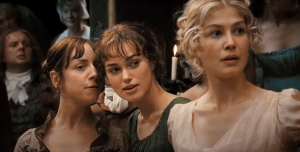 Elizabeth Bennet as a Transitional Figure
One of the most significant early examples of female independence is Elizabeth Bennet in Jane Austen’s Pride and Prejudice. Within the context of the early nineteenth century, her character was remarkably progressive.
Independence of Thought
Elizabeth does not blindly submit to social pressure. She evaluates others critically, including Mr. Darcy. Her refusal of a financially advantageous but emotionally disrespectful marriage proposal demonstrates intellectual autonomy and self-respect.
The causal logic is clear: self-respect → refusal to compromise principles → preservation of personal integrity. In an era when marriage was often a woman’s primary path to economic security, such a decision represented a meaningful assertion of independence.
The Limits of the Context
At the same time, Elizabeth’s independence exists within the structure of a marriage plot. Her story still concludes with matrimony. This is not complete social liberation but an important step toward it. Nevertheless, characters like Elizabeth laid the foundation for further transformation of the female literary figure.
The Nineteenth Century: Inner Protest and Social Boundaries
During the Victorian period, literature increasingly explored the tension between personal desire and societal expectation. Female characters became more psychologically complex.
Jane Eyre: Moral Autonomy
The heroine of Charlotte Brontë’s Jane Eyre embodies a stronger form of independence. Jane insists on moral equality in love and refuses to remain with Rochester after discovering his existing marriage. She chooses integrity over emotional attachment.
Here, a new model emerges: a woman capable of sacrificing immediate happiness in order to preserve moral selfhood. This marked a shift toward portraying women as ethically autonomous subjects rather than passive participants in male narratives.
Tragic Variations
At the same time, many nineteenth-century narratives punished women who violated social norms. These plots reflected societal anxiety about female autonomy. Yet even the presence of such conflicts signaled change. Literature had become a space where the boundaries of women’s roles could be questioned.
The Twentieth Century: Identity and Inner Voice
In the twentieth century, female characters grew increasingly multidimensional. Questions of identity, professional fulfillment, and psychological freedom moved to the forefront.
Existential Dimension
Modernist and later twentieth-century fiction often portrayed women facing existential crises. Their struggles extended beyond marriage and social reputation. They searched for meaning, intellectual engagement, and personal purpose.
These developments paralleled real-world changes: greater access to education, participation in the workforce, and political activism. Literature responded by granting women a stronger narrative voice.
Professional Self-Realization
If Elizabeth Bennet’s primary challenge was choosing the right partner, many twentieth-century heroines aimed for careers, creative expression, or intellectual independence. Marriage ceased to be the only narrative resolution. The emphasis shifted from external status to internal fulfillment.
Contemporary Literature: Complexity Without a Single Model
In twenty-first-century fiction, the female image resists simplification. There is no single dominant type of heroine.
Independence as a Starting Point
Today, independence is often assumed rather than exceptional. Contemporary heroines may be ambitious, emotionally conflicted, professionally successful, or uncertain about their direction. Their identities are not defined solely by relationships.
This reflects broader social changes. Women have expanded access to education, economic resources, and public life. Literature mirrors these realities.
New Forms of Vulnerability
However, independence does not eliminate internal struggle. Modern female characters confront burnout, identity crises, and structural inequalities. Freedom introduces new pressures. Contemporary fiction avoids idealizing independence and instead examines its psychological costs.
Comparative Perspective: From Marriage Plot to Personal Project
Comparing Elizabeth Bennet with a modern heroine reveals three significant shifts:
-
Expanded Sphere of Choice. Early heroines primarily faced decisions about marriage. Contemporary characters navigate career paths, lifestyles, and ideological commitments.
-
Economic Autonomy. Independence now often includes financial self-sufficiency, not merely moral strength.
-
Multilayered Identity. Modern female characters are defined by profession, cultural background, personal philosophy, and emotional complexity, not only by relational status.
These differences demonstrate how literary representation responds to social transformation.
Causes of the Evolution of the Female Character
The transformation of the female literary image was driven by multiple factors:
-
the development of feminist thought;
-
expanded access to education;
-
women’s participation in economic life;
-
changing perceptions of marriage and family;
-
growing interest in psychology and individual experience.
Literature does not exist in isolation. It both reflects and shapes evolving social norms.
Independence and Self-Realization: Distinct but Connected
Independence refers to freedom from external control. Self-realization involves the fulfillment of internal potential. The distinction is crucial.
Elizabeth Bennet demonstrates intellectual independence, yet her opportunities for broader self-realization remain historically constrained. A contemporary heroine may possess economic freedom but still struggle with inner dissatisfaction.
Thus, the evolution of female characters is not a simple linear progression from oppression to fulfillment. It represents increasing psychological depth and narrative complexity.
Literature as a Space for Rethinking Women’s Roles
Fiction provides a framework for examining the balance between personal choice and societal expectation. Modern narratives resist simplified archetypes. A heroine may be strong and vulnerable simultaneously. She may succeed professionally while experiencing emotional uncertainty.
This multidimensional portrayal makes contemporary female characters more realistic and intellectually engaging.
Key Takeaways
-
The female image in literature has evolved from functional symbolism to full subjectivity.
-
Elizabeth Bennet represents an early stage in the development of the independent heroine.
-
The nineteenth century emphasized moral autonomy and inner protest.
-
The twentieth century introduced themes of identity and professional self-realization.
-
Contemporary literature treats independence as normative while exploring its psychological consequences.
-
The evolution of female characters is closely tied to historical, social, and cultural change.
-
Independence and self-realization are distinct but interconnected aspects of female development.
Conclusion
The evolution of female characters in literature reflects society’s gradual recognition of women as autonomous individuals. Elizabeth Bennet marked an important transition, but the modern heroine extends far beyond the marriage-centered narrative. Contemporary fiction portrays women as complex, contradictory, and capable of independent decision-making and personal growth. This multidimensionality makes the modern female image one of the most dynamic and significant elements of literary tradition.
Leave a Reply