
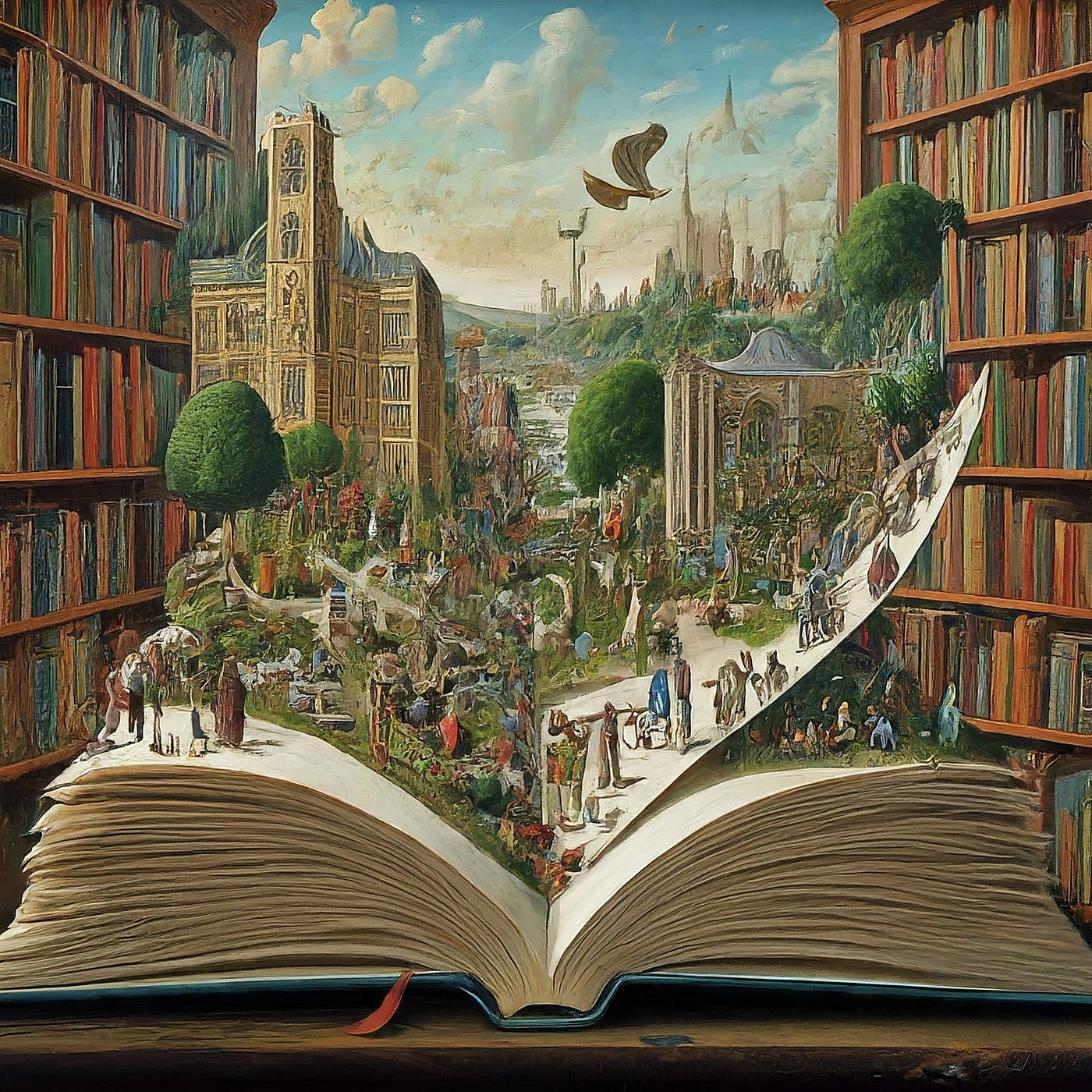
Literature has long fulfilled not only an aesthetic but also a social function. Through artistic images, writers reflect reality, capture the contradictions of their time, and raise issues that concern society. The novel as a genre is particularly sensitive to social change, as it allows for a detailed portrayal of people’s lives within historical and cultural contexts.
Considering literature as a “mirror of society” helps us understand how literary texts reflect social problems, shape public consciousness, and influence the perception of reality. This makes the analysis of novels an important tool for studying not only literature but also social life itself.
Literature and Social Reality: Reflection and Interpretation
The idea that literature reflects society has deep roots. However, it is important to understand that this reflection is not direct or mechanical. A writer does not copy reality but interprets it, highlighting the most significant aspects and giving them artistic form.
The novel makes it possible to depict the complexity of social structure: relationships between classes, economic inequality, cultural norms, and moral conflicts. Through the lives of characters, the reader gains insight into broader social processes.
For example, Charles Dickens portrayed social inequality and poverty in Victorian England. His novels do not merely tell individual stories but reveal systemic problems such as child labor and the injustice of social institutions.
Thus, literature functions not only as a mirror but also as a means of interpreting reality. It helps uncover hidden social mechanisms and critically evaluate the existing order.
 Social Problems in Classical Novels
Classical literature often addresses fundamental social issues that remain relevant today.
One key theme is social inequality. In Les Misérables, Victor Hugo depicts the lives of people on the margins of society. Through the character of Jean Valjean, the novel explores poverty, legal injustice, and social stigma.
Another important theme is the critique of the American Dream and social stratification. In The Great Gatsby, F. Scott Fitzgerald examines the illusion of success based on wealth and status. The story of Jay Gatsby shows how the pursuit of social mobility can lead to disillusionment and loss of identity.
A further significant issue is racial injustice. In To Kill a Mockingbird, Harper Lee addresses discrimination and prejudice within society. Through the lens of a courtroom trial and a child’s perspective, the novel reveals the depth of social bias.
These examples demonstrate that classical novels not only reflect the social issues of their time but also contribute to public discourse around them.
Literature as a Tool of Social Criticism
One of the most important functions of literature is social critique. Through artistic representation, writers can express dissatisfaction with existing systems, expose injustice, and propose alternative perspectives.
The novel as a form allows for deep exploration of problems, presenting them from multiple angles and evoking an emotional response in the reader. This makes literary critique more powerful than abstract analysis or statistics.
For instance, George Orwell in 1984 creates a dystopian world that critiques totalitarian regimes, control over thought, and manipulation of information. Although the setting is fictional, the issues raised are directly relevant to real-world concerns.
Literature can also reveal hidden forms of power and oppression that are not always visible in everyday life. Through narrative and character development, readers become aware of the mechanisms shaping their own reality.
Thus, literature is not only a mirror but also a tool for critical examination of society.
Emotional Impact and the Formation of Public Consciousness
Unlike academic texts, literature affects not only the intellect but also emotions. This makes it a particularly powerful force in shaping public consciousness.
By empathizing with characters, readers gain a deeper understanding of social issues. Emotional engagement fosters empathy and awareness of injustice.
For example, scenes depicting the suffering of children in the novels of Charles Dickens evoke strong emotional responses, drawing attention to the problems of child labor and poverty.
The emotional power of literature can lead to real social change. Historically, many literary works have sparked public debates and even influenced reforms.
Thus, literature not only reflects society but actively participates in shaping its values and beliefs.
Contemporary Novels and New Social Challenges
Modern literature continues to function as a mirror of society, but it reflects new and evolving issues.
Globalization, migration, environmental crises, and digitalization are all themes explored in contemporary novels. Writers examine how identity changes in a globalized world, how technology affects human relationships, and how societies respond to emerging challenges.
For example, contemporary authors explore issues such as digital addiction, information overload, and the loss of privacy. These themes extend the tradition of social critique into a new context.
There is also growing attention to questions of identity—gender, cultural, and national. Literature becomes a space for discussing diversity and exploring new forms of self-expression.
Thus, the modern novel continues to reflect society while adapting to changing conditions and emerging problems.
Key Takeaways
- Literature reflects society but does so through interpretation rather than direct replication.
- Charles Dickens, F. Scott Fitzgerald, and George Orwell demonstrate how novels reveal social issues across different eras.
- The novel is an effective tool for social criticism and analysis.
- The emotional impact of literature helps shape public consciousness.
- Contemporary literature reflects new social challenges while continuing the tradition of social reflection.
Conclusion
Literature as a mirror of society is a complex and multifaceted phenomenon. It does not simply reflect reality but interprets it, reveals contradictions, and generates new meanings.
Through novels, writers explore social problems, demonstrate their impact on individuals, and stimulate public discussion. This makes literature an important tool for both cultural and social analysis.
Ultimately, studying novels allows for a deeper understanding of society—its structure, values, and tensions. Literature becomes a space where reality is examined, reinterpreted, and, to some extent, transformed.
Leave a Reply