
Literature often functions not only as artistic storytelling but also as a space for moral reflection. Through plot, conflict, and character development, authors raise questions that resist simple answers. These questions concern justice, freedom, responsibility, and human dignity.
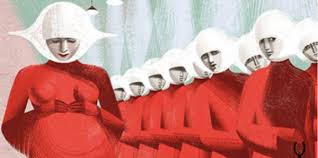
The novel The Handmaid’s Tale is one of the most compelling examples of how a literary work becomes an exploration of ethics. By analyzing the character of Offred and the structure of Gilead’s society, we can see how Margaret Atwood uses fiction to pose complex moral dilemmas that remain relevant both in her time and today.
Morality as a Subject of Literary Exploration
Literature differs from philosophy in that it does not present rigid theories but instead shows moral problems in action. Rather than abstract reasoning, readers encounter concrete situations in which characters are forced to make choices.
This approach makes ethical questions more tangible. The reader does not simply analyze but also experiences the events emotionally. As a result, literature creates space for interpretation: different readers may judge the same actions in different ways.
In The Handmaid’s Tale, morality is not presented as a fixed system of rules. It emerges through everyday decisions, fears, doubts, and compromises. This allows us to see how complex and contradictory ethics can be under social pressure.
 Offred: Moral Choice Under Oppression
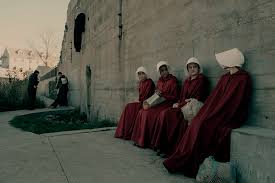
The protagonist, Offred, lives in a totalitarian state where her identity is reduced to a biological function. In such conditions, traditional ideas of freedom and responsibility collapse.
Yet it is precisely in this context that moral questions become sharper. Offred is not a conventional hero: she does not openly rebel or become a symbol of resistance. Her choices are often driven by fear and the instinct to survive.
This raises an important question: where is the boundary between moral compromise and betrayal? Can a person be judged for obeying a system if resistance means death?
Through Offred, Margaret Atwood shows that morality is not always tied to heroic action. Sometimes it appears in small gestures: preserving memory, maintaining dignity, or quietly resisting internally.
Gilead: The Institutionalization of Morality
A key feature of the novel is that morality is explored not only at the personal level but also at the systemic level. The state of Gilead constructs its ideology on religious and pseudo-moral principles.
At first glance, this system seeks order and stability. However, beneath this surface lies oppression, violence, and control. This raises a critical question: can morality imposed by the state be considered genuine?
Gilead demonstrates how morality can become a tool of power. Rules that are declared “right” serve not ethical purposes but the preservation of authority.
This aspect of the novel is especially relevant today. It shows that moral norms are not neutral—they can be used to justify injustice.
Everyday Ethics: The Importance of Small Decisions
In a totalitarian society, grand moral choices are rare. More often, individuals face small, everyday decisions that shape their behavior over time.
Offred constantly encounters situations where she must choose between safety and inner honesty. Her relationships with other characters are not only personal but also moral tests.
These moments reveal that ethics is not limited to extreme situations but is embedded in daily life. Even small actions matter: telling the truth or remaining silent, helping or turning away, remembering or forgetting.
Margaret Atwood emphasizes these subtle choices, showing that morality is formed through a series of small decisions rather than a single defining act.
Literature as a Space for Moral Dialogue
One of literature’s key functions is to create a space for discussing ethical questions. Unlike ideological texts, fiction does not impose definitive answers.
The Handmaid’s Tale does not offer a clear moral position. Instead, it asks questions:
- What does it mean to be free?
- Where is the boundary between survival and resistance?
- Can a system fully suppress moral consciousness?
The reader becomes a participant in this dialogue, evaluating events through their own values and experiences.
This makes literature a powerful tool for moral thinking. It does not simply reflect problems but encourages deeper reflection on them.
Contemporary Relevance of Moral Questions
Although the novel is set in a fictional world, its themes are closely connected to reality. Issues of control, human rights, gender inequality, and freedom remain highly relevant.
Modern societies face similar dilemmas: how to balance security and freedom, how to prevent abuse of power, and how to protect individual rights.
In this context, The Handmaid’s Tale serves as a warning. It illustrates the consequences of abandoning critical thinking and accepting imposed norms without question.
Thus, literature becomes not only a reflection of morality but also a means of rethinking it in a changing world.
Key Takeaways
- Literature explores morality through concrete situations and character choices rather than abstract theory.
- Offred’s character reveals the complexity of ethical decisions under oppression.
- Margaret Atwood demonstrates how morality can function as a tool of power.
- Ethics is expressed not only in heroic acts but also in everyday decisions.
- Fiction creates a space for moral dialogue instead of offering fixed answers.
- The novel remains relevant due to ongoing concerns about freedom, justice, and human rights.
Conclusion
Literature as a form of moral inquiry offers a unique way to examine ethical questions. Through narrative and character, authors create situations that reveal the complexity of human decision-making.
In The Handmaid’s Tale, Margaret Atwood shows that morality is not a fixed set of rules but a dynamic process shaped by context, circumstances, and inner conviction.
The novel demonstrates that even under extreme pressure, individuals retain the capacity for moral choice. This capacity makes literature an essential tool for understanding not only society but also human nature itself.
Leave a Reply