
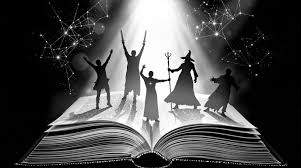
Mythology forms the foundation of many cultural traditions and artistic expressions. Even in contemporary literature, where realism and individual authorial styles dominate, one can detect ancient structures, plots, and imagery rooted in myths. These elements provide depth and universality, making works meaningful and emotionally resonant for readers across different eras and cultures.
Studying mythological motifs helps explain why certain characters and plots recur across civilizations and why they evoke strong emotional responses. Literature, by using mythological archetypes, creates a universal language through which readers can interpret moral, psychological, and social issues.
Myth as the Basis of Artistic Thinking
Myths originated as a way to explain the world: nature, human origins, good and evil. They were not merely stories but comprehensive systems of meaning that shaped a society’s worldview and norms of behavior.
In literature, mythological thinking manifests in recurring motifs, plots, and narrative structures. Even when an author does not explicitly reference myths, the structure of the story often mirrors ancient models.
A classic example is Homer’s Odyssey, which establishes the archetypal “hero’s journey.” This structure, where a protagonist faces trials, overcomes obstacles, and returns transformed, can be traced in modern literature.
For instance, in J. R. R. Tolkien’s The Lord of the Rings, Frodo Baggins follows the hero’s journey: the call to adventure, leaving the familiar world, confronting danger, undergoing crisis, and returning with new knowledge. Despite the fantasy setting, the structure mirrors the mythological template, lending the narrative universality and emotional depth.
Neil Gaiman’s American Gods also demonstrates mythological thinking. Ancient gods navigate the modern world, losing influence and facing loneliness, while interacting with contemporary society. Myths are adapted to modern social and psychological realities, showing that the foundational structures of storytelling remain relevant even in contemporary settings.
 Archetypes as Universal Models of Characters
Archetypes are a central tool for understanding how myths influence literature. Carl Gustav Jung described them as universal images present in the collective unconscious, recognizable to people across cultures.
Archetypes manifest through familiar figures: the hero, mentor, shadow, trickster, mother, and ruler. These figures are instantly recognizable because they reflect fundamental human experiences.
In J. K. Rowling’s Harry Potter series, multiple archetypes are evident: Harry as the hero, undergoing trials and transformation; Dumbledore as the mentor, offering guidance and wisdom; and Voldemort as the shadow, embodying evil and fear. These archetypes are universal and resonate with readers worldwide, even within a fictional magical world.
In Tolkien’s works, archetypes also play a key role: Gandalf is the mentor archetype guiding the hero; Aragorn embodies the king/hero archetype, whose struggle is both personal and collective; Sauron represents the shadow, a force of destruction and moral challenge. The universality of these archetypes enables readers from diverse backgrounds to interpret the characters’ journeys in a meaningful way.
Archetypes allow literature to establish a shared symbolic language, enabling readers to quickly comprehend characters’ motivations and narrative dynamics. This enhances both the artistic and cultural resonance of literary works.
Transformation of Myths in Literature
While myths provide the foundation for archetypes, literature does not merely reproduce them; it transforms and adapts them to new contexts.
In American Gods, for example, gods from diverse mythologies experience modern challenges. They are no longer omnipotent; they struggle to adapt to a world dominated by media, commerce, and human indifference. The archetype of the god is preserved but gains new psychological and social dimensions.
Sophocles’ Oedipus Rex illustrates a classical manifestation of the hero archetype: the individual’s struggle against fate. In modern literature, as in Harry Potter or American Gods, heroes confront new challenges: internal psychological conflicts, societal pressures, and moral dilemmas. The archetypal structure persists, but its content transforms to reflect contemporary realities.
Tolkien’s Frodo also represents a transformed hero archetype. Unlike the invincible heroes of ancient myth, Frodo is vulnerable, prone to doubt, and dependent on companions. His journey emphasizes moral and psychological growth rather than merely physical triumph, demonstrating how mythic motifs evolve in response to changing cultural values.
Mythological Structures in Plots
Myths shape not only characters but also the organization of the plot. Joseph Campbell’s “hero’s journey” model appears across genres and historical periods.
For example:
- In The Lord of the Rings, Frodo’s stages include the call to adventure, departure from the familiar, trials, crisis, and return with new knowledge.
- In Harry Potter, Harry undergoes similar stages: introduction to the magical world, education at Hogwarts, confrontation with Voldemort, and personal growth.
- In American Gods, Shadow’s journey parallels the hero’s journey, blending mythological structure with social commentary.
These structures create coherent, emotionally compelling narratives, allowing readers to intuitively follow the progression of character development.
Symbolism and Deep Meaning
Mythological motifs frequently manifest through symbolism, enabling the transmission of complex ideas efficiently.
Examples include:
- The journey as a symbol of personal development and internal struggle.
- Darkness as fear, uncertainty, or crisis; light as knowledge, moral insight, or enlightenment.
- In Harry Potter, the invisibility cloak symbolizes protection and secrecy, while Hogwarts’ house banners signify shared values and identity.
- In American Gods, roads and journeys symbolize self-discovery and the reevaluation of cultural and personal values.
- In Tolkien, the One Ring represents temptation, power, and moral corruption, linking personal struggle to larger ethical questions.
Symbols enhance depth and universality, enabling works to engage readers across generations and cultures. They also allow authors to convey layers of meaning without didactic exposition.
Contemporary Literature and Mythological Heritage
Modern authors continue to employ mythological motifs, often in more sophisticated and layered ways. They reinterpret classical myths, create alternative versions of familiar narratives, or situate archetypal figures in unexpected contexts.
For instance, Gaiman’s American Gods demonstrates how mythological motifs interact with contemporary society, showing that ancient stories remain relevant when adapted to modern challenges.
In fantasy literature, Tolkien’s Middle-earth functions as a mythic framework where archetypes are tested against ethical, social, and personal dilemmas. Even in science fiction, archetypal narratives persist: characters confront moral, existential, and societal challenges reminiscent of ancient myths.
Key Takeaways
- Myths form the foundational structures of literature, influencing character creation and plot development.
- Archetypes described by Carl Gustav Jung are universal and resonate across cultures.
- Literature transforms mythological motifs to align with historical and cultural contexts.
- Mythological structures, such as the hero’s journey, provide coherent and compelling narrative frameworks.
- Symbolism enriches the depth and interpretive possibilities of literary works, keeping them relevant over time.
Additional Observations and Patterns
- Mythological motifs highlight universal human concerns: the struggle against fate, moral dilemmas, and the search for meaning.
- The hero archetype spans genres from epic poetry to fantasy and science fiction, illustrating continuity across time and culture.
- Mentors, shadows, and tricksters appear in diverse literary traditions, from Homer to Tolkien and Gaiman.
- The transformation of mythological motifs allows stories to adapt to new social, psychological, and ethical contexts.
- Symbolic representation allows literature to communicate complex ideas succinctly, transcending cultural boundaries.
Conclusion
Mythological motifs continue to play a crucial role in literature, shaping archetypal characters and plot structures. They provide a bridge between ancient traditions and contemporary narrative forms, enabling readers to perceive works as meaningful and universal.
By drawing on myths, literature creates enduring symbols and stories that retain relevance across centuries. At the same time, it does not merely replicate tradition; it actively reinterprets and transforms it.
Thus, myths live on in literature, influencing structure, character, and meaning while addressing fundamental human questions and ensuring the universality and emotional impact of storytelling
Leave a Reply