
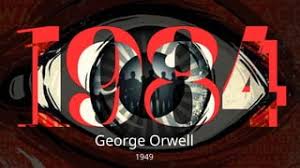
Literature has always been not only a reflection of human experiences but also a tool for analyzing society. Through artistic imagery, writers can reveal hidden social problems, warn of potential dangers, and stimulate critical thinking. Examining works such as 1984 allows us to understand how literature becomes a means of social critique, exposing the threats of totalitarianism, control over individuality, and the loss of human freedom. This topic is important for historians, sociologists, educators, and anyone interested in the relationship between literary texts and social processes.
Dystopia as a Mirror of Totalitarian Society
The novel 1984 belongs to the dystopian genre, which depicts a bleak, often seemingly impossible future dominated by totalitarian power. The meaning of dystopia lies not in predicting a specific future but in demonstrating the dangers of certain social and political dynamics.
Orwell portrays a world where the state fully controls human life. The protagonist, Winston Smith, lives under the constant gaze of “Big Brother.” This image embodies power that seeks to dominate everyone, depriving individuals of their identity and the right to independent thought. Through this example, the author shows how society can easily become an instrument of oppression if people lose the ability to think critically.
Dystopia as a form of social analysis uses exaggeration: the measures of control shown in the novel—from total surveillance to manipulation of consciousness—seem extreme, but that is precisely their power. They prompt the reader to reflect on the limits of state power and the value of personal freedom.
Manipulation of Information and Language as a Tool of Control
A central element of social critique in the novel is the theme of language and information. In the world of 1984, the government creates “Newspeak,” an artificial language that limits the possibilities of expressing thought. The fewer words a person can use, the fewer opportunities there are for critical thinking and resistance.
This approach reflects the reality of 20th-century totalitarian regimes, where control over information and ideological propaganda strengthened power. Understanding this connection is important for modern society: literature demonstrates that language and information are not only means of communication but also tools for shaping human thought.
The manipulation of facts and history in the novel illustrates a cause-and-effect relationship: restriction of knowledge leads to loss of independent thinking, and loss of independent thinking leads to subjugation. Through artistic imagery, Orwell demonstrates the mechanism of totalitarian control and its consequences for society.
Loss of Individuality and Psychological Pressure
Social critique in 1984 is also evident through the exploration of human personality under political pressure. The characters are deprived of the ability to express emotions and desires without fear of punishment. Any sign of independent thought is considered a crime.
Psychological pressure becomes a tool of suppression, instilling fear, mistrust of others, and internal censorship. Winston tries to maintain his individuality and strive for freedom, but the system gradually destroys it. This aspect of the novel demonstrates social critique on a personal level: literature reveals how political mechanisms affect the human inner world, undermining moral and spiritual values.
 Historical and Cultural Context of the Novel
The creation of 1984 is tied to a specific historical moment. After World War II, the world faced the realities of totalitarian regimes such as Stalinism in the USSR and Fascism in Germany. Orwell, who witnessed these events, analyzes through his literary work the threats posed by absolute power.
The cultural context is also significant. Literature of that era often focused on themes of freedom and human rights. The novel reflects Western society’s concerns about increasing state control and ideological propaganda. Understanding this context allows a deeper appreciation of why the work was not just a literary text but a tool of social critique and warning.
Comparison with Other Dystopian Works
To better understand the social function of literature, it is useful to compare 1984 with other dystopian works. For example, We also explores state control over the individual, but it emphasizes mass standardization and the suppression of individuality through a rational system.
The comparison shows that literature by different authors, despite diverse approaches, pursues a common goal: critically examining social and political processes, warning of potential dangers, and stimulating public consciousness. This approach allows readers to see cause-and-effect relationships between politics, culture, and personality.
Literature as a Mirror of the Future and a Tool of Analysis
Through artistic imagery, literature allows readers to view society from a critical perspective. It does not provide direct instructions but creates emotionally and intellectually rich models through which social phenomena can be analyzed.
In the case of 1984, dystopia acts as both a warning and an investigation. It demonstrates the consequences of losing freedom, manipulation of information, and pressure on the individual. Readers can compare these literary models with real historical events, observe social patterns, and understand how government actions impact society.
Practical Significance of Social Critique in Literature
Social critique in literature is important not only for analyzing the past but also for understanding modern society. It helps:
- Develop critical thinking and the ability to evaluate power and information flows.
- Recognize the importance of personal freedom and the risks of losing it.
- Analyze cultural and political processes through artistic representations.
- Compare historical examples with contemporary realities to make informed conclusions.
Literature becomes a kind of laboratory for social experiments, allowing readers to observe the consequences of various scenarios without real-world risks, enhancing its educational and analytical value.
Key Takeaways
- Literature can critically analyze social processes and reveal hidden threats.
- Dystopia allows exaggeration to show the dangers of totalitarianism and control over individuality.
- Manipulation of language and information is a powerful tool of power revealed through artistic imagery.
- Loss of individuality and psychological pressure reflect social consequences of political actions.
- Historical and cultural context helps better understand the author’s critique.
- Comparing different dystopias demonstrates the universality of social critique in literature.
- Literature cultivates critical thinking and awareness of social responsibility.
Conclusion
Literature that examines social processes serves not only as artistic expression but also as critical analysis. Through dystopia and examples like 1984, authors illustrate the consequences of totalitarianism, manipulation of information, and pressure on individuality. This approach allows readers to evaluate historical realities and reflect on contemporary threats to freedom and society. Literature thus becomes a tool for consciously understanding the world and warning about risks humanity faces.
Leave a Reply