

The question of human fate and freedom has always occupied thinkers, philosophers, and writers. Literature allows us to understand these complex issues more deeply, embodying philosophical ideas through the destinies of characters, their actions, inner experiences, and interactions with the surrounding world. Works by European and American authors, such as Oedipus Rex, The Trial, The Stranger, and Brave New World, explore the interaction between the individual and circumstances, showing how internal moral and ethical dilemmas intersect with external events, shaping a person’s fate. Studying philosophical motifs in these works helps us understand how literature reflects the essence of human life, the eternal conflict between freedom and predestination, as well as the moral and social constraints that individuals face.
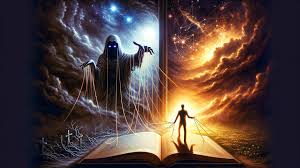 Fate as a Philosophical Category
In literature, fate is often portrayed as something inevitable that determines a person’s life, while also existing as a space where personal will, morality, and chance intersect. In the tragedy Oedipus Rex, King Oedipus’ fate seems entirely predetermined by prophecy: he is destined to kill his father and marry his mother. Yet Oedipus’ attempts to change the future, his deliberate choices, and his quest for truth demonstrate the complex dynamics of human destiny. The prophecy does not merely impose constraints; it creates a moral context in which human actions gain philosophical significance. Oedipus is not simply a victim of circumstances; he is an active participant in a process where fate and personal will are intertwined.
In Franz Kafka’s novel The Trial, Joseph K.’s fate is represented through the lens of an absurd system: accusations and trials without a clear crime place him in a position of complete uncertainty. The protagonist faces a sense of inevitability and meaninglessness, yet it is his internal reflection, attempts to comprehend events, and striving for moral integrity that make the story a philosophical exploration of freedom and predestination. Kafka illustrates that human fate is shaped not only by external constraints but also by inner choices, the search for meaning, and struggles with moral ambiguity.
The philosophical concept of fate is closely connected to freedom and responsibility. European and American authors of the 19th and 20th centuries explored how historical events, social structures, and individual convictions shape human life, not by eliminating freedom, but by guiding it. Fate is not simple predestination; it demands reflection and engagement with circumstances, making literature a tool for philosophical understanding.
Inner Conflict and Moral Choice
Inner conflict is a central element in literature’s philosophical critique of fate. Characters face ethical, psychological, and existential dilemmas, and their choices determine the course and meaning of their lives.
In Oedipus Rex, Oedipus struggles with understanding his guilt and the inevitability of events. His attempts to avoid fate while seeking truth show that inner conflict shapes a person’s unique path. Each of Oedipus’ decisions and moral reflections reveals the philosophical idea that fate is not merely an external force but a process in which personal choice matters.
In Albert Camus’ novel The Stranger, Meursault faces the absurdity of the world, where social norms and external circumstances lack obvious meaning. His fate is influenced by external limitations, but his internal reactions and conscious choices create a unique philosophical experience. Meursault demonstrates that a person can maintain autonomy, accept life’s absurdity, and act according to personal convictions, even when society demands otherwise.
In The Trial, Joseph K.’s inner conflict involves grappling with an incomprehensible bureaucracy, preserving identity, and seeking justice. Kafka shows that the philosophical significance of human fate is revealed through moral choice, reflection on justice, and the ability to act despite external restrictions. Inner conflict is not merely a psychological phenomenon; it defines the boundaries of freedom, shapes responsibility, and influences the trajectory of a character’s life.
Social Conditions as a Factor of Fate
Social and cultural conditions significantly influence a person’s fate. Constraints imposed by society, law, economy, and tradition become part of a character’s life path, shaping the moral and philosophical context of their choices.
In Aldous Huxley’s Brave New World, individuals live in a world where social structure strictly predetermines life paths. Genetic engineering, caste systems, and standardized behavior create an impression of complete control over destiny. However, the novel’s philosophical motif emerges through the characters’ inner experiences and attempts to understand their place in the world. Even within rigid social constraints, humans can recognize limits and strive for autonomy. Huxley demonstrates that fate is shaped by the dialogue between the individual and society, and free will manifests within the boundaries of conscious action.
In Camus’ The Stranger, social expectations and moral norms also impact a character’s fate. Society condemns Meursault for violating common rules, creating conditions for a tragic outcome. Nevertheless, the character’s internal responses demonstrate that fate is formed not only by external circumstances but also by philosophical understanding and conscious decisions. These works show how social context can amplify or limit freedom, while philosophical reflection allows individuals to maintain their individuality.
Fatalism and Free Will
Fatalism and free will are closely intertwined in literature. Fatalism assumes the inevitability of fate, while free will represents a person’s capacity to shape life. Literature demonstrates that these concepts do not oppose each other but interact, creating a complex system in which personal choice and circumstances coexist.
In Oedipus Rex, Oedipus’ attempts to avoid prophecy show the complex interaction between predestination and freedom. The prophecy sets limits, but the character’s actions, moral decisions, and pursuit of truth shape his unique path. In Kafka’s The Trial, Joseph K. faces apparent predestination, but internal actions, reflections on justice, and the search for meaning demonstrate that free will remains even under absurd circumstances.
In Huxley’s Brave New World, individual choice is limited by social and genetic factors, but philosophical reflection, conscious acceptance of limits, and internal experiences show that free will persists even in a highly structured society. Literature illustrates that the philosophical value of life lies in the ability to act and be aware of consequences within external constraints.
Symbolism and Metaphors as a Tool for Philosophical Critique
Symbolism and metaphors reveal philosophical motifs through artistic imagery, making complex philosophical ideas emotionally and intellectually accessible.
In Huxley’s Brave New World, the symbolism of genetic castes, social standardization, and technological control illustrates systemic pressure on the individual and emphasizes the philosophical aspect of fate. In Camus’ The Stranger, the sun, sea, and everyday details serve as metaphors for absurdity, showing how human destiny interacts with existential realities. In Kafka’s The Trial, the judicial system and absurd situations reveal the tragedy of human freedom. Symbolism allows readers to see how external circumstances, internal decisions, and moral choices create a character’s unique life path.
Comparing European and American Literature
European and American literature portray human fate through interactions between the individual and society, moral dilemmas, and historical circumstances. European works emphasize internal choice, ethical and moral conflicts. American literature of the 20th century often focuses on social and cultural environments influencing the individual.
In Huxley’s Brave New World, individuals are constrained by the system, yet internal reflection and philosophical understanding allow characters to recognize limits and attempt autonomous action. In Camus’ The Stranger, Meursault confronts absurdity but shapes his understanding of life through personal choices. In Kafka’s The Trial, free will and internal moral struggle remain significant despite full external constraints. Comparing these works shows the universality of philosophical motifs of fate and the variety of literary ways to express them.
Key Takeaways
- Fate in literature combines predestination and free will.
- Inner conflict and moral choice shape a character’s unique destiny.
- Social, cultural, and historical conditions influence life but do not eliminate personal responsibility.
- Symbolism and metaphors enhance the philosophical meaning of works.
- European and American literature reflect a universal interest in human destiny.
- Literature helps understand the relationship between internal choice and external circumstances.
Conclusion
Philosophical motifs of fate in European and American literature allow a deeper understanding of human nature, morality, and inner freedom. Through artistic imagery and plotlines, writers demonstrate how personal choice, internal conflicts, and social conditions intertwine to shape a person’s life. Literature becomes a tool for conscious understanding of destiny, moral responsibility, and the meaning of existence, reflecting the enduring questions of philosophy and life.
Leave a Reply