
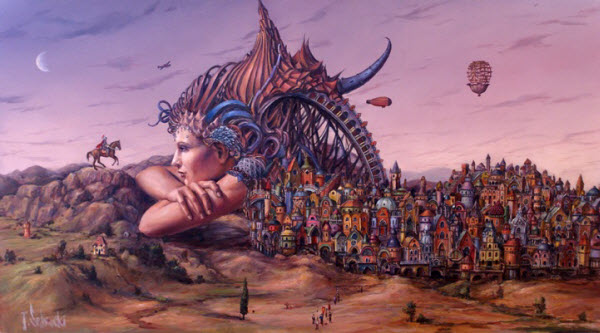
Magical realism is a literary movement in which the real and the fantastical merge, creating a unique artistic reality. In such works, supernatural events are perceived as a natural part of the world, while reality acquires symbolic and philosophical dimensions. Magical realism allows authors to explore cultural, historical, and psychological aspects of society, demonstrating how fantasy and symbolism intertwine with everyday life.
One of the most famous examples of magical realism is One Hundred Years of Solitude by Gabriel García Márquez (English translation). In this novel, the author combines the historical and social reality of Latin America with mythology, fairy-tale elements, and mystical events, creating a world where the impossible is perceived as natural.
This essay examines the characteristics of magical realism, the functions of fantastical elements, the influence of cultural and historical context on the artistic world, and the psychological and philosophical dimensions of works where reality and fantasy are intertwined.
The Concept of Magical Realism
Magical realism is not simply the inclusion of fantastical elements in a narrative. The main principle of the genre is that the fantastical is perceived by characters and readers as a natural part of daily life. The author does not logically explain miracles or mystical events but presents them as facts.
Features of the Genre
-
Symbiosis of the real and the fantastical: everyday life and supernatural events coexist in the same space.
-
Lack of surprise: characters accept magical events as normal, enhancing the sense of a whimsical reality.
-
Symbolism: fantastical elements carry philosophical, historical, and cultural significance.
-
Mythologizing history: authors intertwine real events with myths and legends, creating a sense of timelessness.
These features can be observed not only in Márquez but also in other authors. For example, in Beloved by Toni Morrison, ghosts of the past are perceived as part of the characters’ reality, and interactions with them reveal the consequences of slavery and psychological trauma. In Salman Rushdie’s Midnight’s Children, the magical abilities of children are directly linked to India’s history, turning the fantastical into a metaphor for social and political processes.
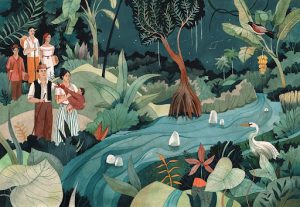 The Fusion of Reality and Fantasy: One Hundred Years of Solitude
In One Hundred Years of Solitude (1967), Márquez creates the unique world of Macondo — a town where the history of the Buendía family, social and political processes, and fantastical events coexist.
Fantastic Elements as Part of Daily Life
In Macondo, reality is filled with magic. Ghosts, flight, longevity, telepathy, and mystical illnesses are perceived by the characters as ordinary phenomena. For instance, the appearances of past family members’ ghosts or the flights of José Arcadio Buendía do not surprise the inhabitants.
A similar sense of merging reality and fantasy is found in Isabel Allende’s The House of the Spirits, where the supernatural abilities of characters (such as foresight and communication with spirits) become a natural part of the story, simultaneously reflecting Chilean social and historical events.
Symbolism of Magic
Fantastical events carry deep symbolic meaning. One character’s flight symbolizes a desire for freedom, while the repeated cycles in the family’s history represent the inevitability of fate and the repetition of past mistakes. In Juan Rulfo’s Pedro Páramo, the coexistence of the living and the dead creates a symbolic world in which the past, memory, and guilt become tangible.
Historical and Cultural Context
Magical realism is closely tied to culture and history. In One Hundred Years of Solitude, Márquez intertwines colonial history, revolutions, social changes, and mythological beliefs. Similarly, in Rushdie’s Midnight’s Children, the protagonist’s personal story is interwoven with India’s historical events, and magical elements serve as a metaphor for national and cultural processes.
The Psychological Function of Magical Realism
Magical realism allows for a deeper exploration of characters’ inner worlds. Through fantastical events, authors reveal hidden emotions, fears, desires, and psychological conflicts.
Example of Psychological Dimension
In Márquez’s novel, characters’ internal experiences manifest in magical forms: ghosts symbolize unresolved pasts, and mystical illnesses reflect moral and emotional dilemmas. The fusion of reality and fantasy creates a space where psychological truths are expressed symbolically.
In Laura Esquivel’s Like Water for Chocolate, characters’ emotions and feelings manifest through magical culinary events. For example, the preparation of special dishes causes emotional reactions in relatives and guests that cannot be explained rationally, yet they reflect the characters’ inner states.
Effect on the Reader
Magical realism challenges the reader to perceive the ordinary differently. Supernatural events are not explained logically but resonate emotionally with real experiences and fears. In Morrison’s Beloved, the past of slavery and the characters’ psychological trauma are conveyed through ghostly visions, enhancing empathy and understanding of their inner world.
The Philosophical Dimension of Magical Realism
Magical realism often carries philosophical significance, exploring questions of fate, time, memory, death, and human nature.
Temporal Cycles and Repetition of History
In One Hundred Years of Solitude, the family’s history repeats across generations, creating a sense of cyclicality. Magical events emphasize the inevitability of fate. Similarly, in Allende’s The House of the Spirits, family stories and characters’ magical abilities highlight the repetition of historical and social events.
Death, Memory, and Disappearance
Magical realism allows death and disappearance to be perceived as both real and symbolic processes. In Pedro Páramo, past and present intermingle, and the dead continue to influence the living, creating a philosophical reality where death is not separate from life.
Magical Realism in World Literature
Although Márquez is considered a key author of magical realism, the genre appears in the works of many writers worldwide.
Examples
-
Beloved — Toni Morrison: ghosts and memories of slavery create a reality where the past is inseparable from the present.
-
Midnight’s Children — Salman Rushdie: characters’ magical abilities intertwine with India’s history.
-
The House of the Spirits — Isabel Allende: family stories and supernatural events convey Chilean cultural memory.
-
Pedro Páramo — Juan Rulfo: the coexistence of the living and dead blurs the line between reality and fantasy.
-
Like Water for Chocolate — Laura Esquivel: characters’ emotions are expressed through magical culinary events.
These examples show the universality of the genre and its ability to explore psychological, cultural, and social processes through fantastical elements.
Key Takeaways
-
Magical realism combines reality and fantasy, making the fantastical part of everyday life.
-
Fantastical elements carry symbolic and philosophical meaning, revealing characters’ inner worlds and cultural contexts.
-
The genre allows the exploration of psychological, moral, and social aspects of human life through artistic metaphors.
-
Magical realism is closely linked to history, mythology, and cultural memory, creating multi-layered narratives.
-
Readers are encouraged to perceive reality differently, recognizing hidden meanings in everyday life and rethinking cultural and moral values.
Conclusion
Magical realism demonstrates how reality and fantasy can coexist in literature, creating a unique artistic world. Through fantastical events, authors explore characters’ psychology, moral and philosophical questions, and social and historical processes. The fusion of the real and the fantastical allows for an understanding of life through symbolism, myth, and emotion, making literature a universal tool for comprehending human nature and cultural memory.
Leave a Reply