
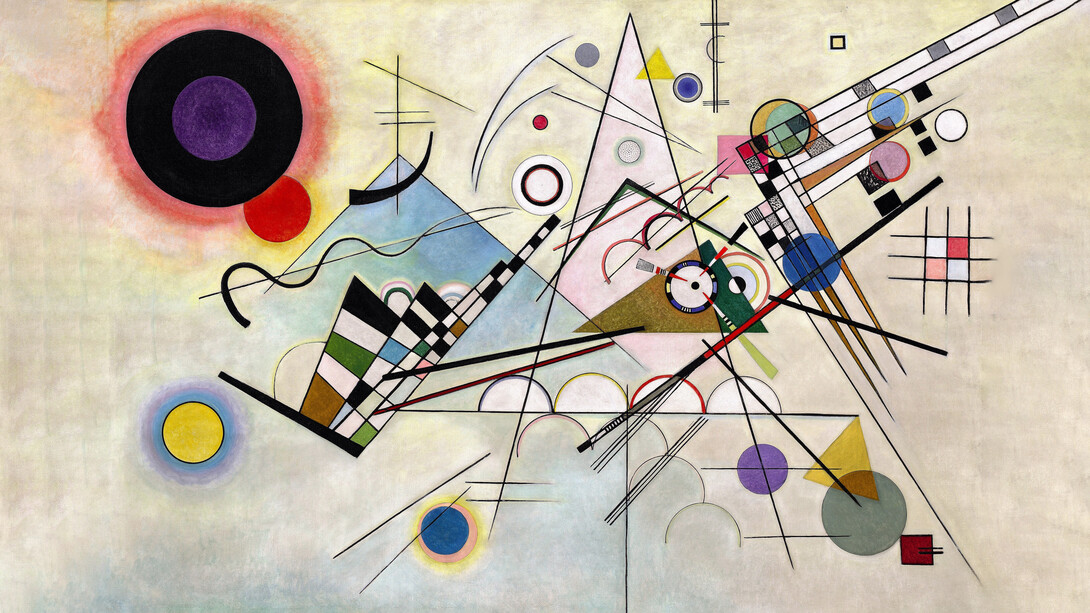
The interaction between music and literature is one of the most compelling topics in the humanities of the 19th and 20th centuries. Music is capable of conveying emotions and states that are difficult to express in words, while literature, in turn, uses sound, rhythm, and imagery to evoke an emotional response comparable to musical perception. Synesthesia — a phenomenon in which one sensory experience evokes associations with another — has become an important tool for writers to convey the inner states of characters and to create complex atmospheres. The study of synesthesia allows us to understand how a text transforms into a multi-layered sensory space, where sound, color, rhythm, and emotion interact.
 The Concept of Synesthesia and Its Literary Application
In an artistic context, synesthesia represents the merging of different sensory impressions into a unified image. In literature, this is expressed through descriptions of sounds that are associated with colors, movement, or emotional states. This technique allows authors to create deeper and more multidimensional representations.
In The Great Gatsby, musical motifs are closely connected with visual atmosphere. Jazz at the parties is perceived not only as sound but also as light, motion, brilliance, and even social tension. Music becomes part of the space, creating a synesthetic effect in which the reader experiences the mood of the scene through multiple senses simultaneously.
In modernist poetry, synesthesia also plays a key role. In The Waste Land, urban sounds, fragments of conversations, and musical motifs intertwine with visual images of decay and emptiness. This creates a sense of fragmented perception characteristic of the era and intensifies the emotional impact of the text.
Music as a Means of Shaping Imagery
In literature, music functions not only as background but also as an active tool for constructing artistic imagery. Rhythm, repetition, sound associations, and references to music shape how characters and events are perceived.
In Beloved, musical motifs inspired by African American traditions serve as a means of conveying memory and trauma. The rhythm of the text resembles a musical composition: it accelerates and slows down, reflecting the emotional states of the characters. Music acts as a bridge between past and present, creating a synesthetic effect in which memories are experienced as sensory and auditory impressions.
In Lolita, sound imagery and linguistic rhythm play a crucial role in shaping the atmosphere. The musicality of the text is evident in its intonation, repetitions, and melodic phrasing. This creates a sense of aesthetic density, where meaning and form become inseparable.
Synesthesia and the Mood of the Text
One of the key functions of synesthesia is the creation of a work’s emotional atmosphere. Through the combination of different sensory elements, an author can convey complex emotional states that cannot be expressed through direct description alone.
In A Clockwork Orange, music becomes part of the protagonist’s perception of reality. Classical music evokes visual and emotional associations, creating a powerful synesthetic effect. This allows the reader to better understand the character’s psychology and to feel the contradictions of his inner world.
Synesthesia is especially important for conveying subtle emotional nuances. It enables the creation of a holistic experience, where mood is shaped not only through plot but also through rhythm, sound, and imagery. In such texts, the reader perceives the narrative not linearly, but as a flow of sensations resembling a musical composition.
The Influence of Cultural and Historical Context
The development of synesthesia in literature is closely connected with the cultural processes of the 20th century. Modernism, the avant-garde, and the rise of musical styles such as jazz and blues significantly influenced artistic forms.
In In Search of Lost Time, synesthesia is used to convey memory. Music, запахи, and visual images merge to create complex associations through which the protagonist relives the past. This demonstrates that perception is not linear but constructed through the interaction of different senses.
Cultural context also shapes the rhythm and structure of literary texts. In 20th-century works, language increasingly imitates musical forms such as variation, repetition, and contrast. This enhances emotional impact and makes synesthesia a central element of artistic expression.
Rhythm and Structure as Musical Principles
One of the deepest manifestations of the relationship between music and literature is the use of rhythm and structure as analogues to musical composition. Writers of the 20th century increasingly construct their works according to principles similar to musical forms: repetition, variation, thematic development, and contrast.
In Ulysses, the structure resembles a complex musical score. Different episodes have their own rhythm, style, and “sound,” creating a polyphonic effect. The reader perceives the text not only as a narrative but as a composition where tempo, repetition, and intonation are essential.
Rhythm is equally important in poetry. Repetition, pauses, and sound patterns create emotional tension similar to musical accents. This allows the author to guide the reader’s perception and intensify emotional impact.
This approach demonstrates that synesthesia operates not only at the level of imagery but also at the structural level of the text. Musicality becomes a principle of organization rather than merely a stylistic device.
Synesthesia as a Means of Deepening Reader Perception
Synesthesia affects not only the form of a literary work but also the way it is perceived. The reader becomes an active participant, interpreting images through personal associations and sensory experience.
When a text simultaneously evokes visual, auditory, and emotional images, it is perceived more intensely. This creates an immersive effect, where the boundary between reader and text becomes less distinct. Literature begins to function like music: not only conveying information but also producing direct emotional experience.
This approach is especially important for works that aim to express complex psychological states. Synesthesia allows authors to move beyond logical description and engage intuitive perception, making the text more expressive and layered.
Key Takeaways
- Synesthesia combines multiple sensory impressions, enhancing artistic imagery.
- Music in literature shapes not only atmosphere but also textual structure.
- Rhythm, sound, and repetition play a central role in emotional impact.
- Synesthesia conveys complex psychological states through sensory imagery.
- The cultural context of the 20th century fostered the development of synesthetic techniques.
- Literature can be experienced like music, where tempo, harmony, and composition are essential.
Conclusion
Synesthesia as a form of interaction between music and literature reveals new possibilities for artistic expression. It allows different levels of perception to merge, creating complex emotional and imaginative structures. Literature of the 20th century demonstrates that language can convey not only meaning but also sound, rhythm, and mood, transforming into a kind of musical form. Through synesthesia, the text becomes a space where the reader not only understands but also experiences the work, perceiving it as a unified sensory whole.
Leave a Reply