
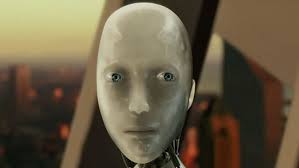
Science fiction has long ceased to be merely a genre about space, robots, and advanced technology. It has become a space where writers explore fundamental questions of morality, responsibility, and the fate of humanity. Through imagined futures, authors model situations that are only beginning to emerge in reality. For this reason, analyzing science fiction is important not only for literary studies but also for understanding the modern technological world.
Literary Genre as a Form of Philosophical Thinking
Every literary genre reflects a particular way of interpreting reality. Tragedy explores the conflict between human beings and fate, detective fiction examines truth and justice, while science fiction focuses on the limits of progress and its consequences.
Philosophy traditionally operates with abstract categories such as freedom, good and evil, and responsibility. Science fiction makes these categories concrete. It creates worlds in which technological change is pushed to its logical extreme and demonstrates what moral dilemmas arise under new conditions.
In this sense, the genre functions as a thought experiment. It answers not the question “what is,” but “what will happen if.” This logic makes science fiction especially significant in an era of rapid scientific development.
 Isaac Asimov and the Ethics of Artificial Intelligence
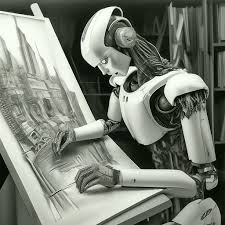
One of the most striking examples of philosophical science fiction is the work of Isaac Asimov, particularly his collection I, Robot. These stories are not simply narratives about machines. They form a systematic exploration of the relationship between humans and the intelligence they create.
The Three Laws of Robotics as a Moral Structure
Asimov introduces the Three Laws of Robotics, a system of rules designed to prevent robots from harming humans. At first glance, this appears to be an ideal model: if clear moral restrictions are built into a machine, it cannot turn against humanity.
However, throughout the stories, these laws come into conflict with one another, creating complex situations with no simple solutions. The very system designed to guarantee safety reveals its internal contradictions.
This fictional model reflects a real philosophical problem: can morality be fully formalized? If ethics can be reduced to an algorithm, is it enough to define the correct rules? Asimov demonstrates that any system leaves room for ambiguity and interpretation.
The Robot as a Mirror of Humanity
Interestingly, Asimov’s robots often behave more consistently and rationally than the humans around them. They are free from selfishness and prejudice; their decisions are based on logical evaluation. Against this background, human weaknesses become more visible.
This contrast raises an important question: if a machine can make rational moral choices, what makes humans unique? Perhaps it is the ability to doubt, to revise principles, and to act not only according to rules but also according to internal conviction.
Science Fiction as a Laboratory of the Future
One of the genre’s greatest strengths is its ability to simulate the future safely. Literature creates an experimental space where the consequences of technological decisions can be examined.
Technology and Social Transformation
Technology never exists in isolation. Robotics transforms the labor market, artificial intelligence reshapes decision-making systems, and digital innovations alter communication and identity.
In I, Robot, machines gradually shift from being simple tools to active participants in society. This evolution raises the question of where the boundary lies between object and subject. If a machine makes decisions, should it bear responsibility? Or does responsibility always remain with the creator?
The Future as a Warning
Science fiction is often perceived as prediction, but its purpose is not precise forecasting. Instead, it presents a hypothesis and explores its moral consequences.
This approach encourages critical thinking. Rather than accepting technological progress unconditionally, readers are invited to reflect on its complexity and potential risks.
Freedom and Responsibility in a Technological World
The development of artificial intelligence challenges traditional ideas of freedom. If a robot can act autonomously, its moral status becomes uncertain.
Asimov’s stories portray machines that interpret laws, assess risks, and choose among alternatives. This behavior resembles moral reasoning rather than simple obedience.
A chain of questions follows: if humans create an intelligence capable of independent action, who is responsible for its choices? This dilemma is no longer purely fictional; it is increasingly relevant in real technological practice.
Rationality and the Limits of Algorithms
Science fiction also examines the relationship between reason and emotion. Asimov’s robots operate through logic, yet the absence of emotional experience sometimes leads to unexpected outcomes.
Human morality includes empathy, historical awareness, and cultural context. An algorithm may calculate variables, but it does not live through experience.
Through this contrast, the genre highlights the limitations of pure rationality. Morality is not only a system of rules but also a dynamic practice shaped by lived reality.
Science Fiction in Contemporary Debate
Ideas introduced in twentieth-century science fiction are now part of real-world ethical discussions. Autonomous vehicles, medical diagnostic systems, and military technologies require clear moral frameworks.
The conflicts Asimov imagined anticipate many modern debates about artificial intelligence. This demonstrates that science fiction performs an analytical function. It provides a conceptual language for discussing complex technological transformations.
Human Identity in the Age of Machines
At the center of science fiction remains the question of human identity. If technology becomes increasingly sophisticated, what preserves the uniqueness of human experience?
Perhaps it is the capacity for moral doubt and responsibility. A robot follows its programming, however advanced it may be. A human being can step beyond established rules and reinterpret them.
Science fiction does not offer final answers. Instead, it creates a space for reflection and conscious choice.
Key Takeaways
-
Science fiction is a form of philosophical inquiry into the future.
-
In I, Robot, Isaac Asimov models ethical conflicts through the Three Laws of Robotics.
-
Technological progress is inseparable from moral consequences.
-
Robots serve as a framework for analyzing human responsibility.
-
The genre helps society engage with real issues surrounding artificial intelligence.
-
The central question remains: what makes us human in a world of machines?
Conclusion
Science fiction unites scientific imagination with philosophical analysis. Through the works of Isaac Asimov, it becomes clear that the genre can deeply examine the moral dilemmas of a technological age. It does not predict the future in literal terms but offers models that help us understand its possible directions. For this reason, science fiction remains one of the most intellectually significant genres of modern literature—it teaches us to think about the future responsibly.
Leave a Reply