

Symbolism in literature is one of the most powerful tools for conveying the ideas, values, and concerns of an era. Through symbolic imagery, an author can reveal the inner world of characters, their moral and psychological conflicts, as well as the social and philosophical realities of the time. A symbol can unite the personal and societal, the external and internal, becoming a concentrated source of meaning that allows readers to gain a deeper understanding of a work and the historical context in which it was created.
Symbolism appears across different genres: in novels about social injustice, psychological and philosophical stories, tragedies, and modernist texts. It not only reveals character traits but also conveys philosophical and cultural ideas characteristic of a particular period.
The Concept of Symbolism in Literature
Symbolism is a literary technique in which objects, characters, colors, actions, or events acquire meanings beyond their literal description. A symbol can be multi-layered, evoke emotional responses, associations, and philosophical reflections, deepening the social, moral, and cultural complexity of a text.
Symbolic imagery allows an author not only to develop the plot but also to reflect the spirit of the era, addressing moral and philosophical issues relevant to society. In 19th- and 20th-century literature, symbolism became particularly prominent as it offered a way to express anxieties connected with urbanization, industrialization, social change, and spiritual crises.
Functions of Symbolic Images
Symbols perform several key functions in literary works:
-
Reflection of the era: symbols can reveal social, economic, political, and cultural trends.
-
Characterization of the hero: symbols help uncover the character’s inner world, moral qualities, motivation, and psychological state.
-
Philosophical reflection: symbols convey ideas related to life, death, fate, morality, or spiritual inquiry.
-
Emotional impact: symbols enhance the aesthetic effect, making a work richer and more complex.
Through symbolic imagery, authors create a link between a character’s inner life and the external context of the era, establishing a literary language that allows readers to perceive hidden meanings within the work.
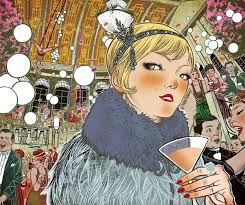 Symbolism in American Literature: The Great Gatsby by F. Scott Fitzgerald
F. Scott Fitzgerald’s The Great Gatsby (1925) is a vivid example of the use of symbolic imagery to reflect the “Roaring Twenties” in the United States. The protagonist, Jay Gatsby, pursues an unattainable dream, symbolized by the green light at the end of Daisy Buchanan’s dock. This light represents hope, longing for the future, and the illusion of the American Dream, illustrating how ideals of material success and personal happiness are simultaneously alluring and unreachable.
The Green Light as a Symbol of Hope
The green light is one of the most famous symbols in 20th-century literature. It does not merely mark a physical location but embodies the protagonist’s inner desire for what is unattainable. The symbol conveys the illusory nature of the American Dream: material prosperity alone cannot secure genuine fulfillment without moral integrity.
Symbols of Wealth and Social Stratification
Cars, parties, and mansions also serve symbolic purposes in the novel. They reflect social stratification, moral emptiness, and the hypocrisy of the era. The outward luxury conceals inner emptiness, demonstrating that material success does not guarantee spiritual satisfaction. These symbols communicate the contradictions of society, where external prosperity coexists with moral decline and alienation.
Gatsby as a Symbol of the Era
Jay Gatsby himself is not only a character but a symbol of an era, embodying ambition, hope, and illusion. He is romantic, ambitious, and willing to make sacrifices to achieve his dream, yet he remains inwardly lonely and morally vulnerable. Through Gatsby, Fitzgerald conveys the contradictions of his time: an era of wealth, rapid progress, and moral uncertainty.
Symbolism in European Literature: The Metamorphosis by Franz Kafka
Franz Kafka’s novella The Metamorphosis (1915) is a classic example of European modernism and symbolism. The protagonist, Gregor Samsa, wakes up one day transformed into an insect, which becomes a symbol of social isolation and personal alienation.
The Symbolism of Physical Transformation
Gregor’s transformation represents psychological and moral alienation from society and family. His physical change symbolizes the impossibility of meeting societal expectations and the pressures imposed by external circumstances. Through this symbol, Kafka conveys a philosophical idea: an individual can be crushed by social and cultural structures, leading to internal fragmentation and loss of identity.
Space and Constraint
Gregor’s room, doors, and windows also carry symbolic meaning, emphasizing the limitations imposed on the individual by society. These elements illustrate how social and moral boundaries can confine a person and intensify inner conflict, helping the reader understand the protagonist’s psychological state and the moral challenges of the modern era.
Social Critique
Kafka uses symbolism to highlight the absurdity of bureaucracy, societal pressure, and family obligations. Gregor becomes an embodiment of the vulnerable individual oppressed by circumstances. Symbolic elements make the work a universal reflection on the crisis of personality and society.
Symbolism in British Literature: Hamlet by William Shakespeare
Shakespeare’s tragedy Hamlet (c. 1600) is a classic example of symbolism in British literature. Water, fire, darkness, and ghosts play key roles in revealing the moral and philosophical conflict of the protagonist.
Water and Fire
Water symbolizes the cleansing of conscience and the possibility of moral renewal, while fire represents destructive passions and personal destruction. These natural elements help the reader understand Hamlet’s internal struggles and moral dilemmas.
Darkness and Ghosts
The ghost of Hamlet’s father and the dark corridors of the castle serve as symbols of moral decay, political corruption, and psychological tension. These symbols allow the audience to perceive the social and moral context of the era, reflecting questions of power, honor, and destiny.
Symbolism of Totalitarian Control: 1984 by George Orwell
George Orwell’s 1984 (1949) demonstrates the use of symbolism to depict social and political issues of its era. Big Brother, telescreens, and surveillance devices symbolize authority, observation, and the suppression of individuality.
Symbolism of Surveillance and Power
Screens and constant observation serve as a metaphor for totalitarian control, where every aspect of a person’s life is monitored and regulated. This symbolism highlights the moral and psychological tension of the era, demonstrating how authority can manipulate consciousness and suppress individuality.
Social Isolation and Fear
In the novel’s symbolic structure, alienation, fear, and moral constraints are presented as inevitable consequences of control. These symbols reveal how social and political structures influence the morality and psychological state of individuals.
Symbolism of Human Nature: Lord of the Flies by William Golding
William Golding’s Lord of the Flies (1954) explores symbolism through the conflicts and behaviors of an isolated group of children. The island itself represents society, while the pig’s head on a stick, the “Lord of the Flies,” embodies primordial evil.
Symbolism of Civilization and Savagery
Through the island and objects on it, Golding illustrates the tension between civilization and primal human instincts. Conflicts among the children reflect moral and psychological issues inherent in human society, highlighting the fragility of social order.
Symbolism of Power and Fear
The “Lord of the Flies” symbolizes fear, power, and the destructive potential of human passions. The symbolism of the novel demonstrates how social conditions can expose internal weaknesses and moral failings, emphasizing universal aspects of human nature.
Key Takeaways
-
Symbolic imagery reflects the ideas of an era through objects, colors, space, and characters.
-
Symbols help reveal the inner world of the hero, as well as moral and psychological conflicts.
-
Symbolism allows literature to convey philosophical, social, and cultural values of the time.
-
Analyzing symbols deepens understanding of historical, cultural, and moral contexts.
-
Symbols unite the personal and societal, making a work multi-layered and universally relevant.
Conclusion
Symbolic imagery plays a crucial role in literature, enabling the transmission of ideas, values, and moral frameworks of an era. Symbols help reveal the inner lives of characters, social and cultural realities, philosophical reflections, and ethical dilemmas. They combine personal and societal, moral and philosophical dimensions, making literature a tool for deep analysis of human nature and historical circumstances.
Leave a Reply