
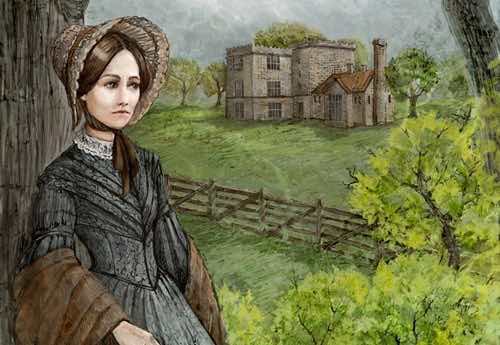
Literature is often perceived as a realm of fiction, yet behind every story stands a real author with personal experiences, struggles, beliefs, and observations. Characters are not merely elements of a plot; they frequently reflect the inner world of their creator. This is especially evident in works where personal experience is transformed into artistic form.
The novel Jane Eyre is one of the most striking examples of how an author’s biography shapes a character. By analyzing the connection between the life of Charlotte Brontë and the figure of Jane Eyre, we can see how personal hardships, social context, and inner convictions influence the heroine’s personality and life journey.
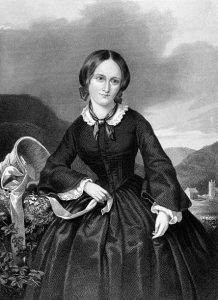
Biography as the Foundation of Character
The life of Charlotte Brontë was marked by significant hardships that found reflection in her novel. She lost her mother at a young age, was raised in a strict religious environment, and endured difficult years at a girls’ school where conditions were harsh and oppressive.
These experiences are clearly mirrored in the beginning of the novel. Jane Eyre’s childhood in the Reed household and later at Lowood School reproduces an atmosphere of deprivation, injustice, and emotional isolation. The heroine faces coldness, punishment, and humiliation—elements that were also present in the author’s own life.
More important than the factual parallels, however, is their psychological significance. Both Jane and her creator undergo experiences of loneliness and forced self-awareness. These conditions shape Jane’s resilience, independence, and strong sense of self-respect.
Thus, biography serves not only as a source of plot elements but also as a foundation for character development.
Psychological Depth: Projection of the Inner World
One of the defining features of the novel is the deep psychological portrayal of the heroine. Jane Eyre is not just a character but a complex individual navigating internal conflicts and moral dilemmas.
Here, the mechanism of psychological projection becomes evident. Charlotte Brontë transfers her own inner experiences to the character: the desire for independence, a strong sense of dignity, and the tension between emotion and moral principles.
For example, Jane’s relationship with Mr. Rochester reflects a conflict between love and moral duty. When she discovers that Rochester is already married, she chooses to leave him despite her deep feelings. This decision demonstrates her commitment to her ethical principles, which can be interpreted as a reflection of the author’s own moral beliefs.
This psychological depth makes the character realistic and compelling. Readers perceive Jane not as a fictional construct but as a living person with coherent motivations and inner logic.
Social Context and the Formation of Personality
An author’s biography includes not only personal experiences but also the social environment in which they live. In the case of Charlotte Brontë, this is Victorian England, with its rigid social structures and limitations placed on women.
Jane Eyre exists in a world where social status determines opportunities. As an orphan without wealth or support, she occupies a vulnerable position. Yet it is precisely within these constraints that her strength of character emerges.
The heroine refuses to submit to injustice and strives for independence. She chooses to work as a governess, asserts her right to respect, and refuses to compromise her principles.
Thus, the social context of the author’s life shapes not only the external setting of the novel but also the internal stance of the character. Jane becomes a symbol of personal freedom and moral autonomy within a restrictive society.
Transformation of Experience into Artistic Form
Despite the clear connection between the author’s life and the character, Jane Eyre is not a direct copy of Charlotte Brontë. Literature involves transformation and reinterpretation of experience.
Real-life events are reshaped, combined, and intensified. They acquire symbolic meaning. For example, Lowood School represents a generalized image of educational institutions of the time rather than an exact replica of a specific place.
This transformation allows the author to create a more universal story. Jane Eyre becomes not only a reflection of personal experience but also a figure through whom readers from different eras can recognize their own struggles and aspirations.
Thus, biography serves as a starting point, but the final artistic result transcends it.
Limitations of the Biographical Approach
Although the connection between biography and character is evident, it should not be overemphasized. There is a risk of reducing the novel to a mere “decoding” of the author’s life, ignoring its artistic autonomy.
Jane Eyre is not only a reflection of the life of Charlotte Brontë but also an independent work with its own structure, symbolism, and thematic depth.
Characters may express ideas that go beyond the author’s personal experience. For instance, Jane can be interpreted as an exploration of personal freedom, moral choice, and identity—making the novel relevant even today.
Therefore, the biographical approach should be combined with other methods of literary analysis to preserve the complexity and richness of the text.
Practical Value of the Analysis
Analyzing the influence of biography on characters allows for a deeper understanding of literature. It helps to:
- Better interpret characters’ motivations.
- Identify underlying themes and ideas.
- Understand how personal experience is transformed into artistic form.
- See the connection between individual and social dimensions in literature.
In the case of Jane Eyre, such analysis reveals how the author’s personal history becomes the foundation for creating a strong, independent, and morally resilient character.
Key Takeaways
- The biography of Charlotte Brontë directly influences the character and life path of Jane Eyre.
- Personal experience is reflected through the psychological depth and internal conflicts of the heroine.
- Social context shapes the conditions in which the character develops.
- Artistic transformation makes the character universal and meaningful beyond the author’s life.
- The biographical approach is valuable but should be balanced with textual analysis.
Conclusion
The novel Jane Eyre demonstrates how closely an author’s life is connected to the fictional world they create. The personal experience of Charlotte Brontë forms the foundation of the heroine’s character, values, and life journey.
However, this connection is neither direct nor simple. Through creative transformation, biographical elements evolve into universal images that resonate with readers across generations.
Thus, analyzing the influence of biography on characters reveals literature as a space where personal experience and artistic imagination intersect, producing deep and multilayered meaning.
Leave a Reply