
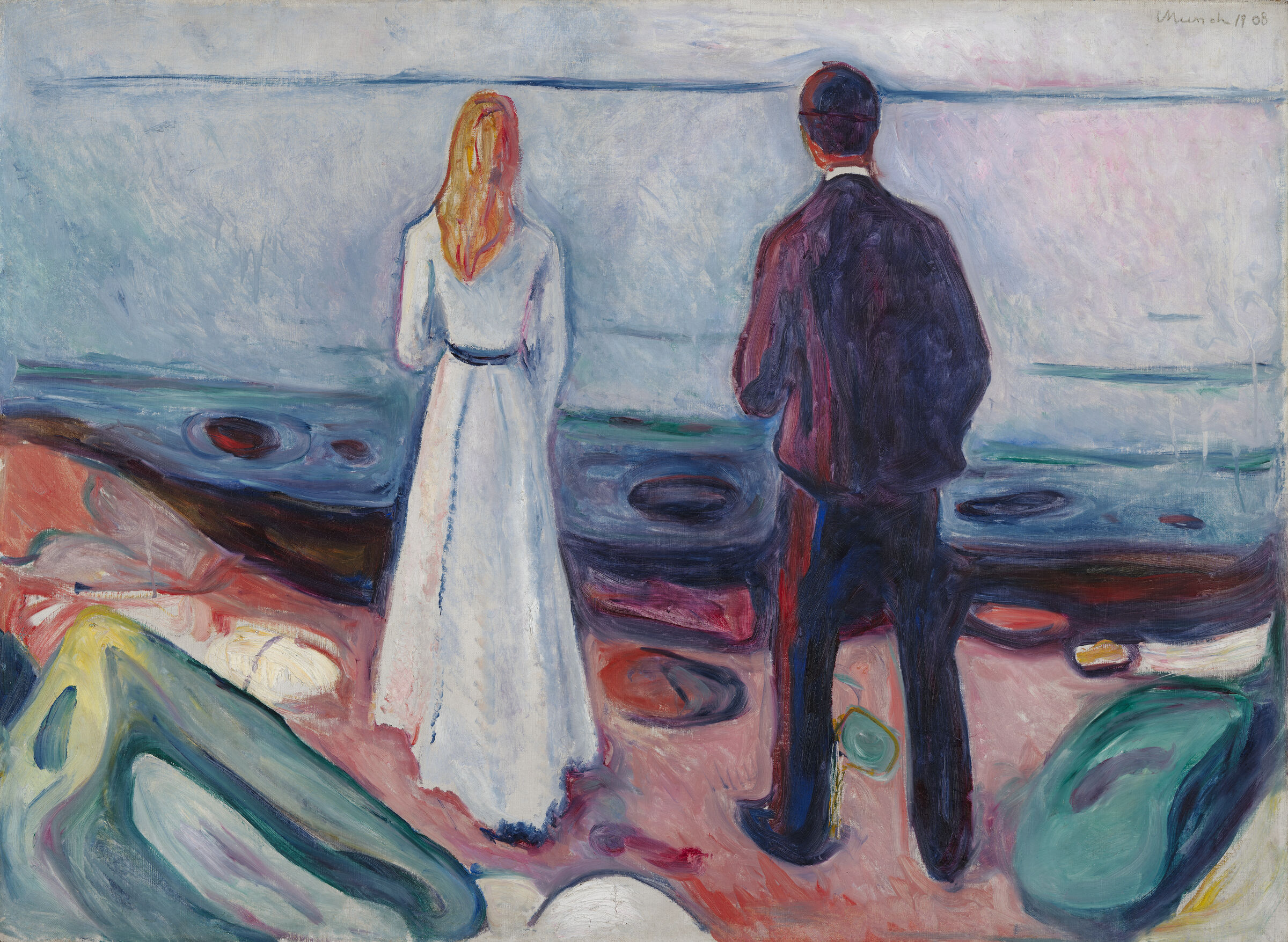
The 20th century was a period of radical changes in society, culture, and philosophy. Literature of this era reflected deep crises of human identity, moral uncertainty, and a sense of the loss of meaning amid modernization, wars, and totalitarian regimes. One of the key motifs appearing in works by various authors is loneliness, understood as a psychological, social, and existential state, as well as the search for meaning, which enables characters to confront inner emptiness. Studying this motif in 20th-century literature allows us to understand how writers portrayed questions of human freedom, moral responsibility, and the striving for personal wholeness in a constantly changing and often absurd world.
Loneliness as a Psychological and Philosophical Phenomenon
Loneliness in 20th-century literature is presented not only as social alienation but also as a profound psychological condition related to the awareness of one’s uniqueness and separation from the surrounding world. Authors use the motif of loneliness to explore the inner world of humans and demonstrate their psychological and philosophical complexity.
In Albert Camus’ novel The Stranger, the protagonist Meursault is portrayed as a person alienated from society, unable to conform to its moral and social norms. His loneliness manifests not only through external isolation but also through inner detachment and acceptance of the absurdity of existence. Camus demonstrates that the experience of loneliness is closely linked to the recognition of absurdity: the world lacks inherent meaning, leaving a person alone with this knowledge. Meursault’s internal distance allows the author to explore philosophical themes of freedom and responsibility, showing that loneliness can become a source of conscious choice and personal autonomy.
Similarly, in Notes from Underground, although written in the 19th century, the work significantly influenced 20th-century literature. The protagonist deliberately withdraws from society, immersing himself in reflection about himself, morality, and the meaning of life. His loneliness is not merely social isolation but a philosophical act of self-discovery, revealing personal freedom and responsibility. This motif became foundational for 20th-century works, where loneliness is closely tied to existential crises.
 The Search for Meaning in an Absurd World
The 20th century was marked by the philosophy of the absurd, articulated by Camus and other thinkers. Literature of this period shows that the search for meaning is a human response to chaos, randomness, and inner emptiness encountered in a world lacking apparent structure or predestination.
In Franz Kafka’s novel The Trial, Joseph K. faces an absurd bureaucratic system, where actions have no clear logic and outcomes are unpredictable. His loneliness is intensified by misunderstanding and lack of support, emphasizing the impossibility of finding socially validated or conventional meaning. Kafka demonstrates that meaning in life is constructed internally and is revealed through moral and intellectual effort. The search for meaning becomes a philosophical trial: the ability to comprehend absurdity and act in spite of it becomes central to human autonomy.
Similarly, in Samuel Beckett’s play Waiting for Godot, loneliness and waiting form a fundamental existential motif. Characters constantly await an event or person that would give their lives meaning, yet this expectation remains endless. Beckett uses minimalism and symbolism to convey inner emptiness and alienation, creating a philosophical context in which human life is seen as a process of continuous waiting, uncertainty, and internal tension.
Loneliness as a Consequence of Social Alienation
Loneliness often arises not only from internal conflicts but also from societal conditions. The 20th century brought industrialization, urbanization, totalitarian regimes, and mass depersonalization. Literature of the period shows how these processes affect the inner world of individuals.
In Aldous Huxley’s Brave New World, individuals live in a highly structured and standardized society where emotional bonds are suppressed and personal autonomy is limited. Characters experience a sense of loneliness induced by social mechanics, yet this alienation stimulates philosophical reflection: understanding that external structures do not define the inner self becomes a key aspect of the search for meaning and personal identity.
In J.D. Salinger’s The Catcher in the Rye, Holden Caulfield embodies adolescent loneliness in postwar American society. His alienation is manifested through his rejection of social norms, his pursuit of sincerity, and his search for personal value. 20th-century literature demonstrates that social loneliness often transforms into existential loneliness, prompting philosophical and moral reflection.
Influence of Historical and Cultural Context
Historical catastrophes of the 20th century, such as world wars, totalitarianism, and economic crises, created a backdrop that intensified the motifs of loneliness and the search for meaning. Writers responded to these events through psychological portraits of characters and philosophical reflections on human nature.
In Erich Maria Remarque’s All Quiet on the Western Front, soldiers experience loneliness on the front lines, facing a loss of moral and existential orientation. The experiences of the characters show how extreme circumstances amplify existential crises and the necessity for internal search. The author emphasizes that even under collective conditions — war, violence, and fear — humans remain individuals capable of seeking meaning and preserving inner integrity.
In the works of Kafka and Camus, the historical and cultural context of the 20th century also shapes the experience of loneliness. Contradictions, bureaucratic chaos, social norms, and moral uncertainty create conditions in which characters feel isolated. Literature becomes a space for philosophical interpretation, where loneliness serves as a tool for analyzing human freedom and the capacity for moral choice.
Symbolism, Absurdity, and Existential Philosophy
To express loneliness and the search for meaning, 20th-century writers actively employ symbolism, metaphors, and absurdist techniques. These artistic tools allow authors to convey the complexity of the characters’ inner world and the philosophical depth of their experiences.
In Beckett’s Waiting for Godot, emptiness, waiting, and minimalism of space reflect the characters’ inner void, while absurd dialogues symbolize the impossibility of finding universal meaning. In Camus’ The Stranger, the sun, sea, and everyday details serve as metaphors for absurdity and loneliness, revealing existential understandings of freedom and responsibility. Kafka employs labyrinthine judicial systems, incomprehensible rules, and the futility of characters’ actions as symbolic structures illustrating the absurdity of the world and the necessity of independently searching for meaning.
Comparing European and American Approaches
European and American literature of the 20th century develop the motifs of loneliness and the search for meaning in different ways. European authors often emphasize internal conflict and philosophical or existential dimensions, while American works frequently explore social conditions, personal psychology, and cultural influences.
For example, in Camus’ The Stranger, internal loneliness is presented as a philosophical experience, whereas in Salinger’s The Catcher in the Rye, adolescent social alienation and the search for individual identity are central. In Huxley’s Brave New World, social structure and standardization intensify loneliness, simultaneously prompting characters to engage in philosophical reflection about life’s meaning. These differences highlight the diversity of literary strategies for expressing loneliness and the search for meaning.
Key Takeaways
- Loneliness in 20th-century literature manifests as a social, psychological, and philosophical condition.
- The search for meaning is a response to absurdity, chaos, and the loss of moral orientation.
- Social and cultural conditions intensify alienation but also stimulate inner growth.
- Symbolism and absurdity convey philosophical depth and existential experience.
- European and American literature demonstrate different approaches to loneliness and meaning.
- 20th-century literature explores freedom, moral responsibility, and the ability to maintain individuality amid alienation.
Conclusion
The motif of loneliness and the search for meaning in 20th-century literature allows a deeper understanding of human psychology, morality, and existential questions. Through artistic imagery, inner conflicts, and social context, writers show how individuals confront absurdity, alienation, and uncertainty. Literature becomes a tool for philosophical reflection, demonstrating that loneliness does not necessarily lead to destruction but can stimulate the search for meaning, moral reflection, and inner freedom. The 20th century revealed that even in solitude, humans are capable of profound inner life, conscious choice, and philosophical understanding of their destiny.
Leave a Reply